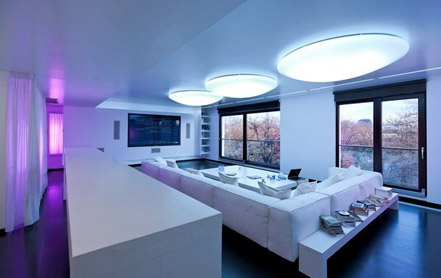
 Light, Just like the color, enriches the interior, extracts his nooks and crannies, emphasizes architecture. Lighting design applies primarily to artificial light, However, you can also "control" natural lighting, using shutters, blinds, Openwork walls and green plants as sunlight filters.
Designing the distribution, The type and intensity of light sources should first rationally organize good lighting of all apartment centers, According to their function. Each room, In addition to general lighting, should have additional, Special light sources, used in performing various activities – such as reading, writing, sewing, listening to music, preparing meals, Hygienic and public activities, etc..
In the kitchen, next to general lighting, It is necessary to install luminaires under a series of upper cabinets. They provide proper lighting of the working surface and at the same time do not blind the meals preparing. The bathroom uses side light sources next to the mirror above the sink, Similarly in the hallway by the mirror to light a viewer. In the bedroom, bedside lamps placed at the head of beds are used to illuminate the book or newspaper.
The dining corner requires a light source installed directly above the table, leisure – intimate, delicate lighting, located around the relaxation zone. This also applies to a balcony or loggia – discreetly illuminated greenery there creates an illusion of the garden just outside the window. It is particularly important, Correct lighting of the work corner (in the office, children's room, etc.). For people writing with the right hand, the light source is always set in the left part of the desk (table, secretary). The lamp illuminating the workplace should give quite a lot of light directed directly at the countertop. Near the place, where you watch TV, listens to the radio or reads a convenient lamp with a lampshade directing the light down. Such a lamp must always be lit when watching TV, This reduces the unhealthy contrast to the eyes between the brightness of the screen and the darkness of the room. Using various light sources in each room to light individual zones of the room, stirring and targeting them, and therefore skillfully operating the light, Various moods are created in the interior.